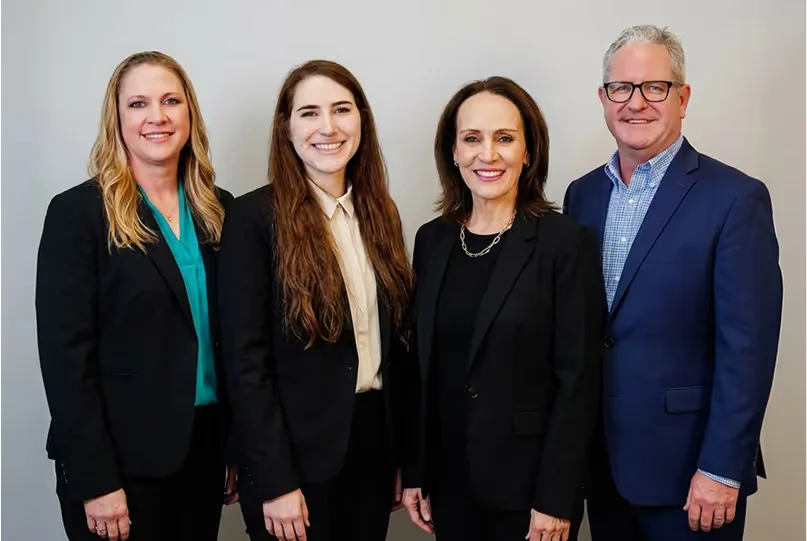




Results That Kept Families on Their Feet
A denial letter can feel final, especially when trauma already makes every phone call and form a struggle. Our clients have shown it isn't.
Millions in Maximum Back Pay
We overturned an unfair denial and recovered the full back pay our client was owed.
$164 Million in Benefits Secured
We won SSI benefits and Medicaid coverage for a disabled child in Texas.
300+ Appeals Won
We won a challenging SSDI appeal for a veteran with a 100% impairment rating.
Is PTSD a Disability Under Social Security Rules
Can you get a disability for PTSD? Yes. The Social Security Administration (SSA) lists trauma- and stressor-related disorders in its own impairment manual, so a PTSD diagnosis can support an SSDI or SSI award. The diagnosis alone won't carry the claim, though. The SSA wants to see how your symptoms shut down your ability to work week after week.
We represent people whose PTSD grew out of many kinds of trauma, including:
- Combat and military service: Deployments, IED blasts, firefights, and losing members of your unit.
- Violent crime and assault: Physical or sexual assault, domestic abuse, armed robbery, or a shooting.
- First-responder work: Police officers, firefighters, paramedics, and ER staff exposed to repeated scenes of death and injury.
- Serious accidents: Highway wrecks, industrial accidents on job sites, and workplace injuries that nearly took your life.
- Disasters and sudden loss: Tornadoes, house fires, floods, or witnessing a loved one's violent death.
Does PTSD Qualify for Social Security Disability
It can, if your records meet the SSA's standards. The agency evaluates PTSD under Listing 12.15, Trauma- and Stressor-Related Disorders, found in the mental disorders section of its "Blue Book".
Paragraph A: The medical proof. Your records must document all five of these:
- Exposure to actual or threatened death, serious injury, or violence;
- Involuntary re-experiencing of the event, such as intrusive memories, dreams, or flashbacks;
- Avoidance of external reminders of the trauma;
- Disturbance in mood and behavior;
- Heightened arousal and reactivity, such as an exaggerated startle response or disrupted sleep.
Paragraph B or C: The functional proof. You also need one of two things.
- Paragraph B: An extreme limitation in one, or a marked limitation in two, of these areas: understanding, remembering, or applying information; interacting with others; concentrating, persisting, or keeping pace; adapting or managing yourself.
- Paragraph C: At least two years of documented PTSD, ongoing treatment or a structured setting that reduces your symptoms, and only marginal ability to adapt to new demands outside that support.
Meeting the listing word for word is rare, so many PTSD claims are instead approved by showing your limitations rule out all full-time work.
#cta_start
The Scars Don't Show on an X-Ray. We Make Them Visible.
Disability examiners often decide PTSD "can't be that bad" if you look fine in a 15-minute appointment. We gather the treatment history, sleep records, and witness statements that show what your days really look like.
#cta_end
Your VA Rating and Your SSDI Claim Are Two Separate Fights
Many of the veterans who call us already receive VA compensation and assume Social Security will follow the VA's lead. It won't. The two agencies measure disability in completely different ways.
- The VA rates partial disability. A 50% or 70% PTSD rating means the VA sees partial impairment. Social Security pays only for total disability, meaning you can't sustain full-time work.
- The SSA does not defer to the VA's decision. For claims filed on or after March 27, 2017, 20 CFR 404.1504 says the SSA won't analyze another agency's disability decision. It will still weigh the medical evidence behind it, so your VA treatment notes and C&P exam results matter a great deal.
- A 100% P&T rating speeds things up. According to the SSA's veterans page, veterans rated 100% Permanent and Total get expedited processing. The SSA usually identifies these veterans automatically, but it’s smart to mention your rating when you apply and have your VA notification letter ready. Fast processing is not an automatic approval.
- Wounded Warriors get priority too. Service members who became disabled while on active duty on or after October 1, 2001, also qualify for faster handling.
- VA compensation does not shrink an SSDI check. You can collect both. SSI is different, because the SSA counts VA payments as income that can reduce or eliminate an SSI award.
We help you pull your VA medical records, including what’s available through My HealtheVet, along with your C&P exam results, and translate them into the language Social Security uses. Veterans across Dallas, Fort Worth, and the rest of our service area work with us virtually or in person.
Why PTSD Claims Are Strongest Alongside a Physical Injury
The SSA must consider the combined effect of all your impairments, even when no single condition is severe enough on its own. That rule is why we usually build a PTSD claim alongside a physical impairment. Trauma rarely stops at the mind. The same event that caused your PTSD often injured your body too.
Common pairings include:
- A blast or vehicle rollover that caused both PTSD and spinal damage.
- A workplace fall that wrecked a knee and left lasting panic around job sites.
- A heart attack survivor with intrusive fear of another cardiac event.
- Chronic pain and sleep loss that feed each other night after night.
We document the mental side as specific work restrictions your doctors can sign off on. These include being off task for long stretches, missing several days a month, or being unable to handle coworkers, supervisors, or the public.
Paired with a physical limit, those restrictions can rule out every job a vocational expert names. For claimants over 50, the SSA's medical-vocational guidelines can tip the scale further. Our qualifying conditions guide explains how this works for other diagnoses too.
Already Have a VA Rating? Let’s Talk SSDI.
Your VA decision doesn’t carry over to Social Security, but the records behind it can. Burke will review your PTSD claim for free and tell you honestly where it stands.
- Free Case Review
-
or Call Us Directly
 (888) 780-9125