
.avif)




SSDI vs. SSI: What Is the Difference and Why Does It Matter
Garland is one of the most ethnically and economically diverse cities in Texas. It’s a community of working families, skilled tradespeople, manufacturing workers, and small business owners who have spent decades contributing to the system. When disability strikes, it not only affects the individual worker, but affects the future of their entire family. It is critical to understand exactly which federal program applies to your situation before you file a single form with the government. Getting this wrong at the start costs time and money you cannot afford to lose.
Social Security Disability Insurance (SSDI) is the program you paid into directly through the FICA taxes withheld from every paycheck you received throughout your working life.
- Work history required: You generally need to have worked in the last 10 years and accumulated enough Social Security credits to qualify.
- No income or asset test: SSDI eligibility is based entirely on your inability to work, not on how much money you have in the bank or what your household earns.
- Monthly benefit: Your check reflects your personal earnings history. The more you earned over your career, the larger your monthly benefit would be.
- Healthcare: A successful SSDI claim leads to Medicare eligibility, which begins 24 months after your established date of entitlement.
- Who qualifies: Workers with sufficient credits whose disability prevents substantial employment, and adults disabled since before age 22.
Supplemental Security Income (SSI) draws from the general federal treasury and operates under an entirely different set of rules than SSDI.
- No work history required: SSI does not require you to have ever worked or contributed to Social Security.
- Strict financial limits: Your household income and total countable assets must fall below tight federal thresholds. A spare vehicle, a small savings account, or income from a family member living with you can all affect eligibility.
- Monthly benefit: All approved recipients receive the same federal base rate, reduced by any countable income you already receive.
- Healthcare: SSI approval in Texas activates Medicaid coverage immediately, with no waiting period.
- Who qualifies: Low-income disabled adults without sufficient work credits and disabled children from lower-income households.
#cta_start
Has a Disability Forced You Out of Work in the Last Two Years?
If the answer is yes, you likely have a claim worth fighting for. Speak directly with Attorney Burke Barclay today — not a receptionist, not a paralegal.
#cta_end
Standing Up for Garland Workers with Serious Medical Conditions
Garland's workforce is built on manufacturing, distribution, healthcare, and skilled trades, industries that demand physical endurance and exact a long-term toll on the body. When a serious illness or injury finally crosses the line from manageable to disabling, the consequences hit fast: lost income, mounting medical bills, and a federal bureaucracy that seems designed to say no. We represent clients across Garland and eastern Dallas County who can no longer work because of:
- Severe physical impairments (primary claims): We pursue SSDI and SSI benefits for clients living with serious heart disease, aggressive cancers, major neurological conditions such as stroke recovery, Parkinson's disease, and severe neuropathy, and chronic disorders of the spine, hips, and joints that make sustained physical activity impossible.
- Mental health conditions (secondary claims): Disability is rarely just physical. We build cases that incorporate severe depression, PTSD, and anxiety disorders as secondary impairments layered on top of a primary physical condition. Judges are trained to evaluate the full scope of a claimant's limitations, and we make sure the complete picture is in front of them.
Medical Records: The Difference Between Winning and Losing
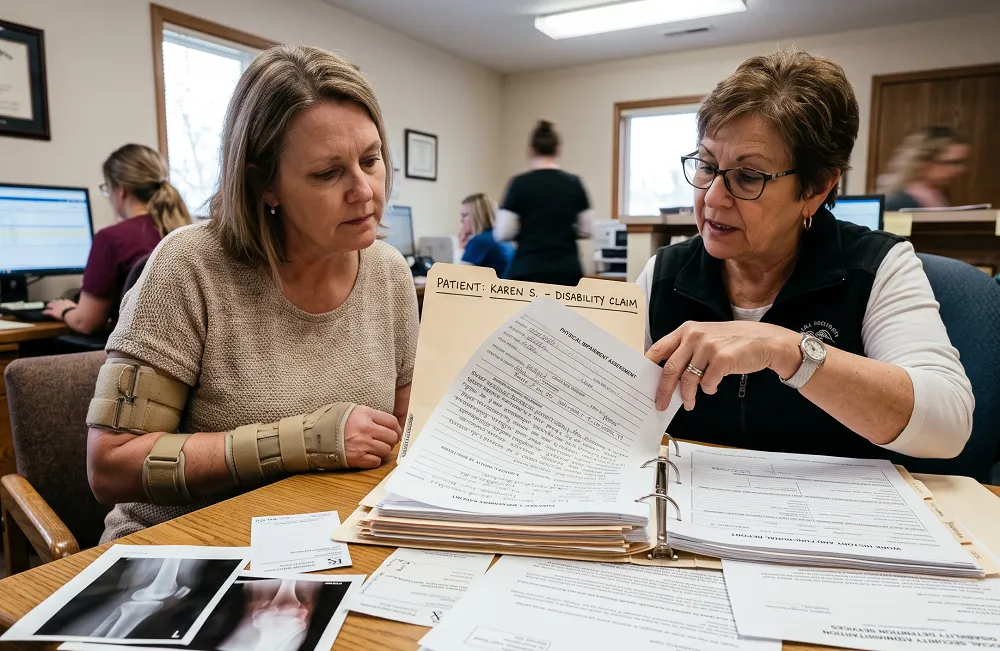
The SSA does not approve disability claims based solely on your testimony, but approves them on documented medical evidence. Continuous, well-organized records from treating physicians are the foundation of every winning case. If your insurance coverage lapsed when you stopped working, and there are gaps in your treatment history, do not let that stop you from filing. We regularly connect Garland-area clients with local care options, including Parkland Health facilities and Dallas County community health centers, to build the uninterrupted documentation record the SSA and your hearing judge will expect.
Fast-Tracking Approvals for Critical Diagnoses
Some medical situations simply cannot wait for a standard 18-month federal timeline. If you or a family member has been diagnosed with a condition on the SSA's Compassionate Allowances (CAL) list, such as ALS, inoperable cancers, or early-onset Alzheimer's disease. We know exactly how to structure and flag your application to qualify for expedited processing. In CAL cases handled correctly, decisions can come in a matter of weeks rather than years.
Denial Letter in Hand? Your 60-Day Window Is Already Counting Down.
From the date stamped on your denial notice, you have exactly 60 days to file a formal appeal. Miss that deadline and you will almost certainly lose the back pay that has been accumulating since your original filing date. Do not wait. Contact our Garland SSDI attorney specialist now.
- Schedule a Free Consultation
- or Call Us Directly
 (888) 780-9125




.avif)