
.avif)




SSDI and SSI: Two Programs, Two Very Different Sets of Rules
A surprising number of Irving residents apply for the wrong program (or give up entirely) because they cannot figure out which federal benefit actually applies to them. Here is a plain-language breakdown of how the two programs work in Texas:
Social Security Disability Insurance (SSDI) is funded by the payroll taxes withheld from every paycheck you have ever earned. Think of it as a disability insurance policy you spent your entire working career paying into.
- Work history requirement: You generally need to have worked five of the past ten years to have enough credits to qualify.
- No asset test: Your home, your car, your retirement savings do not matter and are not factored into whether you’re eligible for SSDI. The only question is whether your medical condition prevents you from working.
- Benefit calculation: Your monthly payment is based on your historical earnings record, so higher lifetime wages typically mean a larger check.
- Healthcare: SSDI approval opens the door to Medicare eligibility, which kicks in 24 months after your entitlement date.
- Who can apply: Workers with enough credits whose disability prevents substantial employment, and adults disabled since before age 22.
Supplemental Security Income (SSI) is a separate, needs-based program drawing from the general federal treasury, not your personal Social Security contributions.
- Work history requirement: None. SSI is available regardless of whether you have ever held a job.
- Strict financial limits: Household income and total countable assets must fall below tight federal thresholds. A second car or a small savings account can disqualify you if it pushes you over the limit.
- Benefit calculation: Everyone approved receives the same federal base rate, reduced dollar-for-dollar by any other countable income.
- Healthcare: SSI approval in Texas automatically activates Medicaid coverage on the same day your benefits begin.
- Who can apply: Low-income disabled adults who lack the work credits needed for SSDI, and disabled children from lower-income households.
#cta_start
Not Sure Which Benefits Apply to You?
Call us, and we will review your work record and financial picture together. In some cases, clients qualify for both SSDI and SSI simultaneously, and we will make sure you claim every dollar you are entitled to.
#cta_end
Fighting for Irving Workers Sidelined by Serious Medical Conditions
Irving sits at the geographic center of the DFW metroplex, making it one of the region's most active hubs for transportation, logistics, hospitality, and corporate management. The physical toll of warehouse work, long shifts in food service, years behind the wheel, and the relentless pressure of operations management does not show up on an X-ray, but it shows up every morning when you try to get out of bed.
We build strong federal cases for clients who can no longer work because of:
- Severe physical impairments (primary claims): Our firm pursues back pay and monthly benefits for our clients. We help people win benefits who are dealing with advanced cardiovascular disease, aggressive cancers, debilitating spinal and joint disorders such as degenerative disc disease and severe arthritis, and serious neurological conditions, including stroke recovery, Parkinson's disease, and peripheral neuropathy.
- Mental health conditions (secondary claims): Chronic illness rarely stops at physical symptoms alone. We routinely build appeals that document severe depression, PTSD, and anxiety disorders as secondary conditions running alongside a primary physical impairment. Judges consider the full picture of a claimant's suffering, and we know exactly how to present both your physical and mental condition.
Why Your Medical Records Decide Your Case
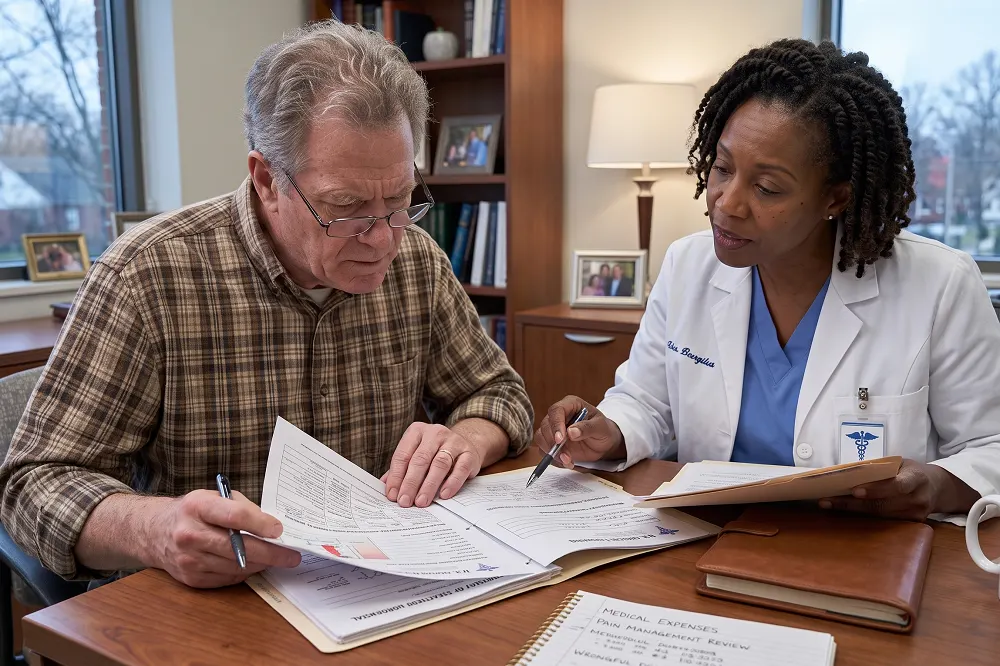
The SSA does not just take your word for your limitations, but closely reviews your doctors' records as well. If gaps in your treatment history exist because you lost your health insurance when you stopped working, we can direct you to area safety-net providers, including Parkland Health facilities and Dallas County community health centers, so you can establish the consistent medical documentation a judge needs to approve your claim.
Expediting Claims for Terminal and Rapidly Progressing Illnesses
For families dealing with a devastating diagnosis, waiting 18 months for a hearing is not realistic. If a loved one has been diagnosed with a condition on the SSA's Compassionate Allowances (CAL) list, such as late-stage lung cancer, ALS, or inoperable brain tumors, we know how to flag the application immediately. A properly submitted CAL case can result in approval in a matter of weeks, not years.
Received a Denial Letter? Your Clock Is Already Running.
The SSA gives you exactly 60 days from the date on your denial notice to request a formal appeal. If you miss that window, you may have to start over entirely and forfeit months or years of accumulated back pay. Contact an experienced Irving SSDI attorney now before that deadline passes.
- Schedule a Free Consultation
- or Call Us Directly
 (888) 780-9125




.avif)