
.avif)




SSDI vs. SSI: What’s the Difference
The Social Security Administration administers two very different benefit programs, and confusing the two is one of the easiest ways to derail a claim before it even starts. Here is how each program applies to people living in Plano and across Collin County:
Social Security Disability Insurance (SSDI) works much like an earned insurance benefit. Every paycheck you have ever received contributed to this fund through FICA payroll deductions.
- Work credits needed: In most situations, you must have worked roughly five of the last ten years to maintain insured status.
- Wealth-neutral eligibility: Your savings, your spouse's paycheck, and your home equity do not disqualify you. SSDI looks at whether you can still hold a job, not at your bank balance.
- Monthly benefit amount: Your check is tied to the wages you earned during your working years, not a flat federal number.
- Healthcare access: Approval makes you eligible for Medicare once a 24-month waiting period has elapsed.
- Eligible groups: Disabled workers with sufficient earnings history, plus adults whose disabilities began during childhood.
Supplemental Security Income (SSI) is a federal safety-net program funded by the general U.S. Treasury, not by Social Security trust fund contributions.
- Work credits needed: None. You do not need an employment history to apply.
- Tight financial cutoffs: You must fall under strict income and asset thresholds. Even a modest vehicle, a small inheritance, or a second bank account can affect eligibility.
- Monthly benefit amount: Calculated against a federal base rate that is the same nationwide, then reduced by any countable income.
- Healthcare access: In Texas, SSI approval comes bundled with same-day Medicaid eligibility.
- Eligible groups: Low-income disabled adults without enough SSDI credits, along with disabled children in low-income households.
#cta_start
Not Sure Which Program Applies to You?
Reach out to us. We will walk through your earnings record and your current finances to point you toward the right program, all at no charge to you! And, when the situation allows, we will pursue both benefits at once.
#cta_end
Going to Bat for Plano Workers with Serious Health Conditions
Plano is one of the most demanding corporate and tech hubs in North Texas, home to the headquarters of companies in healthcare, financial services, telecommunications, and retail. Years of long hours at a desk, repetitive computer work, intense commutes up the Dallas North Tollway, and the chronic stress of high-pressure executive roles take a real toll on the body and the mind.
We stand up for clients whose health no longer lets them keep up with the demands of work, including:
- Serious physical conditions (primary claims): We pursue back benefits for individuals living with advanced heart disease, aggressive forms of cancer, neurological injuries (such as strokes, multiple sclerosis, and severe neuropathy), and breakdown of the spine, knees, hips, and shoulders.
- Mental and cognitive conditions (secondary claims): Losing your career rarely affects only your body. We are skilled at building a case around major depression, anxiety disorders, cognitive decline, and PTSD when they layer on top of a primary physical impairment, a strategy that consistently moves the needle for judges.
The Role of Medical Documentation
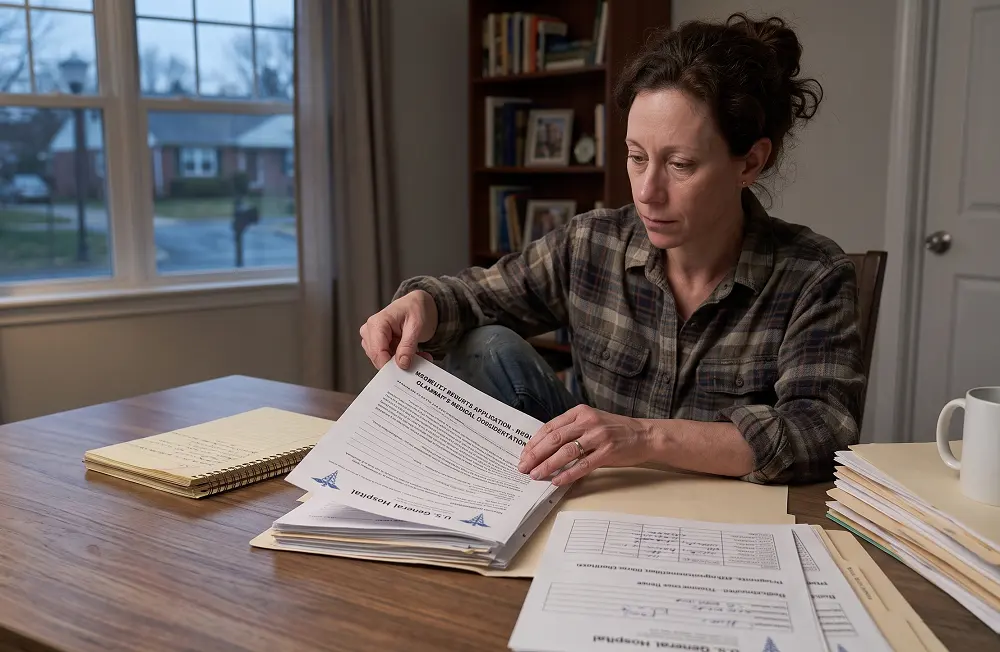
Without consistent medical records, even a legitimate disability claim will collapse in front of a judge. If your insurance lapsed when you stopped working, do not panic. We point clients to affordable care options across the metroplex, including the Parkland Health system and Collin County community clinics, so we can build the unbroken treatment history the SSA expects.
Fast-Track Help for Aggressive Diagnoses
Some illnesses simply do not allow for a multi-year wait. If you or a loved one has been diagnosed with a rapidly progressing condition, such as ALS, glioblastoma, pancreatic cancer, or early-onset Alzheimer's, to name a few, we will pursue the Social Security Administration's Compassionate Allowances (CAL) designation. This program lifts your file out of the standard queue, potentially resulting in a decision in weeks rather than years.
Holding a Denial Letter? Don't Restart from Scratch.
Filing a brand new application after a denial is one of the most expensive mistakes you can make, as it can wipe out the back pay you have already accrued. From the day your denial is dated, you have just 60 days to file an appeal. Speak with a Plano SSDI attorney before that clock runs out.
- Schedule a Free Consultation
- or Call Us Directly
 (888) 780-9125




.avif)